













Client Success Case Studies
From Business Growth to Business Recovery and Exit
In 2000, Barry invested in a security franchise after recognising the long-term growth potential within the industry. In his first month, the business generated just £700 in turnover. Through consistent networking, relationship-building, and a strong work ethic, the business grew to £300,000 annual turnover within 24 months.
By year three, turnover exceeded £500,000. Barry then expanded further by becoming a Master Franchisor and successfully developed six franchise territories. The business quickly scaled beyond £1 million and later exceeded £2 million before eventually being sold.
In 2006, Barry invested in a plumbing franchise under the same group. Within 18 months, the business had grown to almost £250,000 turnover, and by year three the franchisor approached him directly to buy the business back for a significant return.
However, around 2012–2013, the security business began to lose momentum after the franchisor sold to a larger security company. The new owners decided to close the brand and gave franchisees 36 months to wind down operations. During this period, Barry faced significant challenges including employee issues, legal disputes, financial pressure, a Revenue audit, property-related complications, and multiple High Court actions.
At one stage, the pressure became overwhelming. Barry realised the greatest challenge was not simply the business itself, but his mindset, beliefs, and decision-making patterns. Determined to rebuild, he sought guidance from a mentor and coach.
That decision transformed both his personal and professional life.
By changing his mindset, improving his thinking, and implementing a structured approach, Barry was able to resolve major legal and financial challenges within a matter of months. He negotiated a successful outcome with Revenue, resolved all court actions without additional losses, and secured a long-term agreement with the franchisor that allowed him to continue operating for a further ten years with no royalty fees.
By January 2017, Barry had completely transformed the way he approached business and leadership. The business once again grew to almost £2 million turnover.
In 2021, Barry successfully exited the business, selling the operational side while retaining valuable property assets. The process took over 12 months and allowed him to create long-term financial stability.
Today, Barry owns and operates multiple businesses across security, coaching, whiskey, beauty, software development, property, retail, marketing, and digital services. With more than 30 years of entrepreneurial experience, he now helps other business owners avoid the same mistakes and scale their businesses with greater clarity, structure, and confidence.
Turning Around a Struggling Service Business
Bren had been running a service-based business for over five years while supporting both domestic and commercial clients. Like many business owners, he was trying to manage every aspect of the business himself — customer service, operations, invoicing, bookkeeping, collections, marketing, and administration.
Despite working extremely hard, the business was not generating consistent profits. Bren struggled to pay bills, cover rent, or even pay himself a reliable income. Over time, this began to affect his confidence, self-worth, and ability to communicate effectively.
Within just six weeks of implementing a new strategy and structure, Bren completely transformed both his business and mindset.
His turnover increased by more than 30%, he developed stronger habits and behaviours, and his confidence improved significantly. As a result, he became more effective in both business and personal relationships.
For the first time in years, Bren was able to reward himself with a new vehicle and take a proper family holiday — something he had previously felt was impossible.
Building a Sustainable Coaching Business
Ciara initially started her own coaching business with a passion for helping others. However, due to inconsistent client acquisition and uncertainty around sales, she returned to full-time employment with another coaching company.
Within just a few weeks of developing a clear client enrolment system and structured business strategy, Ciara began attracting clients consistently.
This allowed her to leave full-time employment and fully commit to building her own coaching business.
Today, Ciara enjoys a steady flow of clients, greater confidence in her business model, and the freedom to create the lifestyle and career she originally envisioned.
Growing a Business Without Sacrificing Family Life
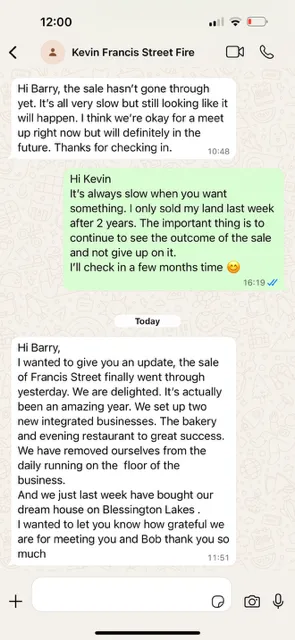
Claire and Willie operated a successful fire and safety business while also managing the demands of family life and raising children.
Although the business was performing well, they found themselves constantly consumed by day-to-day operations with little time for themselves or their family. Like many growing businesses, success came at the expense of balance.
By implementing a structured step-by-step business system, they were able to create more organisation, improve delegation, and regain control of their time.
Even during the challenges of COVID, they expanded the business and increased turnover by 34% year-on-year. They also grew their team, took time away from the business, and achieved a personal milestone by securing and renovating a property previously owned by Willie’s grandfather.
Most importantly, they regained balance while continuing to grow a profitable business.
Scaling a Car Sales Business Through Systems and Structure
Alan Carroll, owner of Bloomfield Car Sales, was selling approximately 30 cars per month alongside operating a busy workshop business.
Like many business owners, much of his day was spent “firefighting” operational issues and reacting to problems rather than focusing on growth.
By restructuring the business with improved systems, performance tracking, and a stronger operational framework, the business became significantly more efficient.
With clearer reporting, stronger processes, and a shift in mindset, Alan was able to create more time, improve team performance, and increase sales capacity.
The result was substantial growth — from 30 car sales per month to 50, and eventually over 70 sales per month.
Scaling a Beauty and Training Business
Aisling owned and operated a successful teeth whitening clinic while also running a training academy.
Following the arrival of a new baby, balancing business operations and family life became increasingly challenging.
By automating key parts of the business, introducing systems and tracking for revenue, marketing, and promotional spending, and identifying the most profitable services, the business became far more manageable and scalable.
With stronger systems in place, Aisling was able to create a clear growth strategy and position the business for long-term expansion.
Scaling an E-Commerce Cosmetic Brand
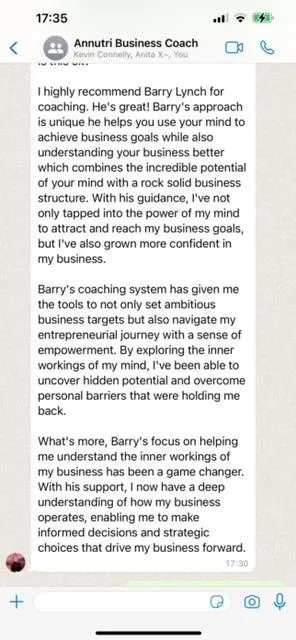
Anita co-owned an e-commerce cosmetics business alongside her business partner Kevin.
The first step was defining a clear vision for growth, including 12-month, 36-month, and 60-month revenue targets. From there, attention shifted towards mindset, leadership behaviours, systems, and accountability.
By implementing KPIs, business tracking systems, and structured processes, the business became easier to manage while requiring less day-to-day involvement.
The next phase focused on improving product margins, identifying the most valuable customers, strengthening cash flow forecasting, and creating a strategy for rapid growth.
As the business evolved, Anita developed a long-term roadmap involving opportunities such as franchising and international licensing.
Eventually, Anita bought out her business partner and chose to lead the business on her own terms.
Today, she operates a growing brand with greater clarity, control, and freedom.
Creating More Time and Profit in a Cleaning Business
Rohan had operated a cleaning business in the UK for several years and had already invested heavily in personal development and business training.
Despite this, he still felt something was missing.
The first step was addressing mindset and helping him think differently about business growth and leadership. From there, the focus shifted towards creating more time freedom and reducing operational overwhelm.
By introducing systems and standard operating procedures for both Rohan and his employees, the business became more organised and efficient.
The next stage involved analysing existing clients, identifying the most profitable work, and implementing a more targeted marketing strategy to support growth.
As a result, Rohan gained more control over the business while creating a clearer path towards sustainable expansion.
Improving Financial Control and Profitability
Shane owned a carpentry business employing eight staff members.
While highly skilled at his trade, he found managing the financial side of the business challenging. Cash flow, profitability, and job costing lacked visibility, making it difficult to understand where the business was truly performing.
A financial tracking system was introduced to monitor income, expenses, labour costs, and profitability across individual projects.
This allowed Shane to clearly understand hourly operating costs, profit margins, and the financial performance of each completed job.
Once cash flow and collections improved, attention shifted towards reclaiming time, improving operational efficiency, and creating space to work on the business rather than constantly working in it.
With stronger systems in place, Shane was then able to focus on growth strategies, identifying the most profitable customers, and implementing targeted marketing.
The result was a more organised, profitable, and scalable business.
Creating More Profit and More Freedom
Abi and Faye each ran separate cleaning businesses in the UK and were both facing very similar challenges. Day-to-day operations had taken over their lives, leaving little time for anything outside the business. Financial pressure was constant, with both businesses struggling to maintain healthy cash flow and profitability.
The first step was helping them develop a new mindset around growth, leadership, and opportunity. Once that shift happened, we introduced systems and processes designed to save time, reduce stress, and improve efficiency across the businesses.
We then analysed their hourly costs, overheads, and profit margins to identify where money was being lost and where profits could be improved immediately.
By restructuring operations and focusing on the most profitable activities, both businesses were able to increase profitability while reducing unnecessary workload. The result was more time freedom, stronger financial stability, and a clearer path for long-term growth.
From £10,000 Investment to a Seven-Figure Exit
At 18 years old, Barry began working for a carpet cleaning business. Shortly after joining the company, the owner became seriously ill and offered Barry the opportunity to buy the business.
Despite having little financial backing and struggling to secure funding, Barry eventually obtained a bank loan at a 16% interest rate and purchased the business in 1990 for £10,000.
At the time, Barry was responsible for every part of the business — carrying out the work, generating sales, quoting jobs, and building client relationships. Through hard work and determination, he secured multiple commercial contracts and developed a strong recurring client base.
Within just two years, the business grew from £50,000 annual turnover to over £500,000.
Barry then expanded further by adding a second franchise territory and launching a contract cleaning division, which helped grow the company into a seven-figure business.
In 1999, he successfully sold the business in two separate divisions — the contract cleaning business and the carpet cleaning division — achieving a highly successful exit before moving into the security industry the following year.
This experience laid the foundation for more than 30 years of building, scaling, franchising, and selling businesses across multiple industries.